
Navigating the Tree view
It is possible to zoom in and out by holding down CTRL (or  on Mac) and using the scroll-wheel on the mouse or using the zoom options in the bottom-right corner of the Minimum Spanning Tree view.
Nodes can be selected by clicking them (which toggles them on and off), or by dragging the mouse to create a lasso selection (figure 10.7).
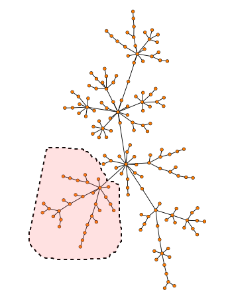
Figure 10.7: Minimum Spanning Tree lasso selection.
It is possible to clear the current selection by pressing on an empty region of the canvas.
When nodes are selected, they will stay in a fixed position. This can be helpful when manually adjusting the layout, for instance, to prepare the tree for publication (figure 10.8).
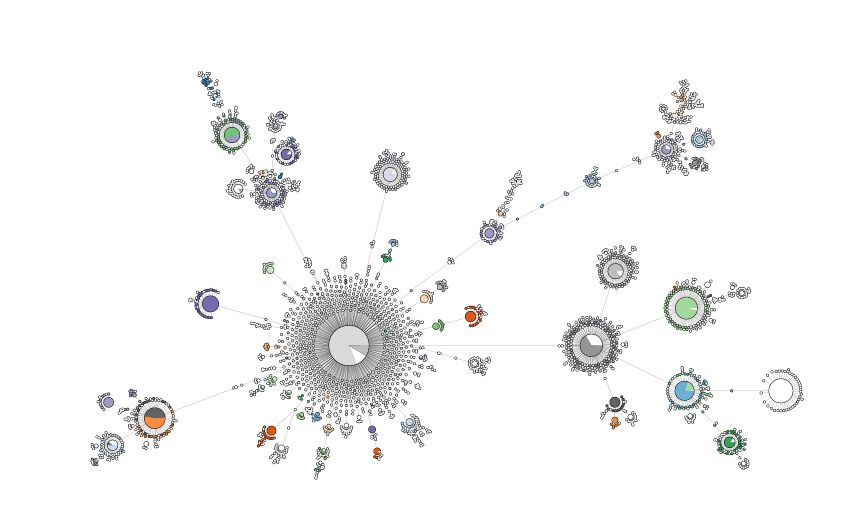
Figure 10.8: Minimum Spanning Tree with manual layout modifications.
At the bottom of the view, two buttons make it possible to Select Sequence Types in Other Views and to Create MLST Sub Scheme:
- Select Sequence Types in Other Views. Selected sequence types will be selected in an opened and linked Minimum Spanning Tree or Sequence Type Table view, either from the same MLST Scheme or an MLST Comparison made from the same MLST Scheme. Selecting one or more sequence types in one of the views, followed by clicking the button, will result in the same sequence types being selected in the other view.
- Create MLST Sub Scheme (only in MLST Schemes). This makes it possible to create a new scheme based on a selection of sequence types in the scheme.
Create MLST Sub Scheme has the same options as the other scheme creation tools, except for some additional options for pruning the scheme (figure 10.3):
- Locus fractional presence. The fraction of sequence types required to have an allele specified for a given locus before the locus is added to the new scheme. For instance, a value of 0.95 would mean that the resulting scheme only contains loci present in at least 95% of the selected sequence types (a loose core genome scheme).
- Keep all alleles. If this option is deselected, only alleles that are part of at least one sequence type are retained. Alleles from discarded loci will always be removed.